
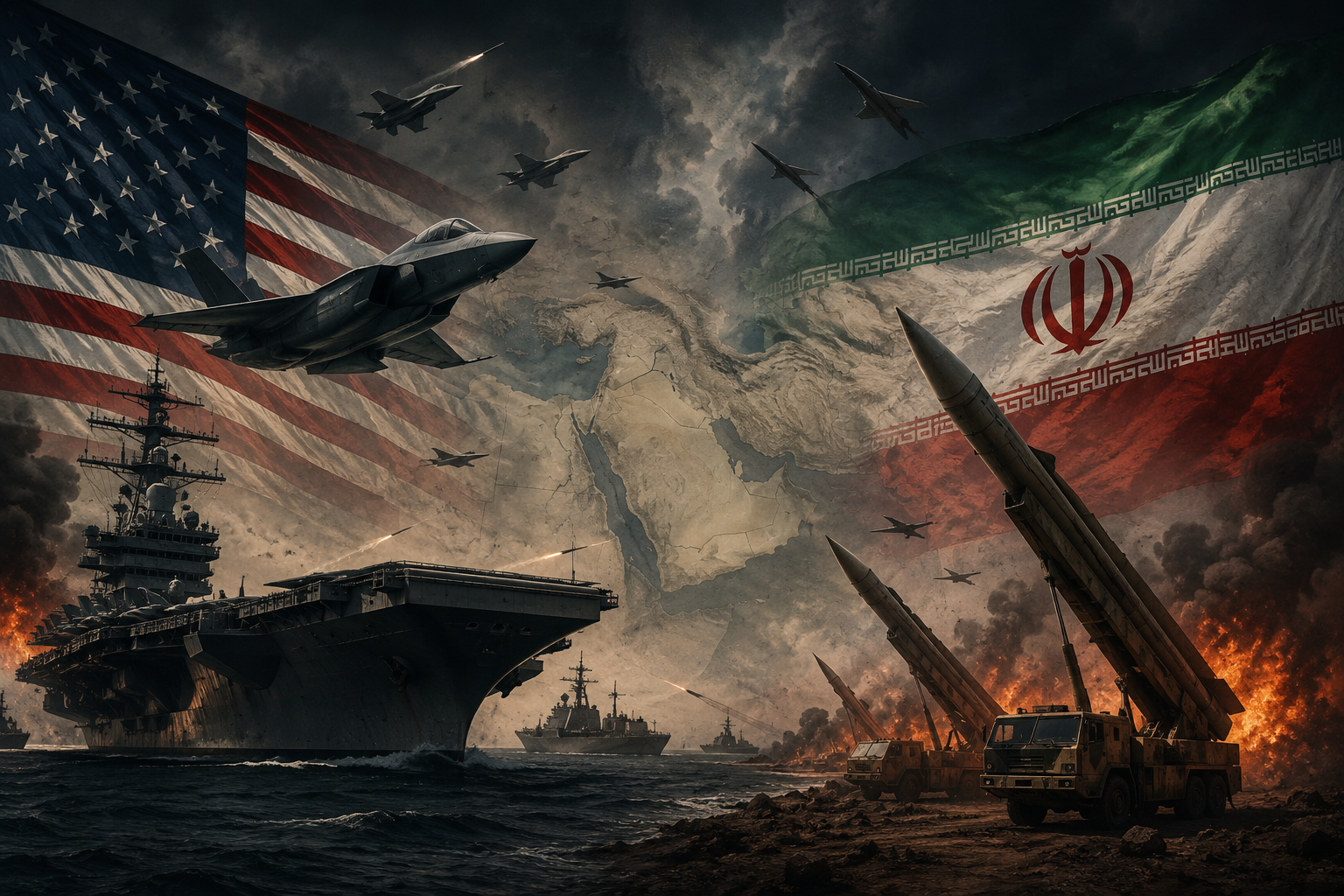
“Trump has cornered himself with his war in Iran,” said Sidney Blumenthal in The Guardian article of the same title, on March 3, 2026, literally four days after the initial strikes in Iran began. As early as three days after strikes began, reporters asked President Trump, “if there could be a long, drawn-out conflict in the Middle East if the United States attacks Iran.” During WWII, the U.S. Army Chief of Staff George Marshall famously said that a democracy like the United States cannot win a seven-year war. Much of the peer-reviewed International Relations literature support the premise that democracies are overwhelmingly effective in war, as long as they are of a short duration. Generally, as a war crosses the 18-month timeline, a democracy begins its decline and ultimate defeat. In today’s world of 30 second soundbites, immediate polling, TikTok and Instagram reels, and a myriad of other instant gratification news sources and opinion pieces, it appears that years or weeks have shrunk to days.
Wars do not resolve in days, the amazing Venezuelan Operation Absolute Resolve notwithstanding. The American public overwhelmingly wanted, and still wants Iran to be prevented from having a nuclear weapon. The American public also overwhelmingly wanted, and still wants no war with Iran. The American public wants a no-war war, but reality does not function that way. President Trump, and future Presidents, are hampered by the populace’s irrational wants and desires.
The American public want their cheap gas, trinkets from Walmart and Amazon, universal healthcare, and affordable housing. To the extent the American public has had access to those things relies solely on the status of the US as a, or the superpower, backed by the US dollar as the world’s reserve currency. China, with the BRICs movement, its swelling navy, its “belt and road initiative,” its intellectual property theft, its ever-present threat to Taiwan with its top-line microchips, and its expansionist desire to control shipping lanes must be stopped. A nuclear Iran, under the control of a doomsday cult, that slaughters tens of thousands of its own people, enslaves millions, and who believes America is, “the Great Satan,” cannot be allowed.
The world has real problems, with real borders, real nations, and real causes and effects. To solve such problems, the United States uses every lever of national power, diplomacy, intelligence, military, and economics to maintain the world order, such that it is. The US has spent 40 years in China, Iran, and elsewhere using diplomacy, intelligence, and economics, to little effect. In the final analysis, the only and ultimate enforcement mechanism in the world community is hard power, and American hard power has saved millions. Those who desire healthcare, affordable housing, groceries on-demand, and cheap trinkets from around the world, will be sorely disappointed with a world in which America is not the guarantor of free shipping and international order.
Even if one should disagree with the real issues above, even if one disagrees that China is such a threat, or a nuclear-armed Iran is a threat, it cannot be denied that military action will again be required by a future President. If, in such a case, support collapses the second gas prices rise. If the second the news cycle shows a random speed boat succeeding in damaging a ship, a rocket is shot into a neighbor-state, some of our drones are shot down, one of our manned aircraft is shot down, or even when there’s loss of US military lives, the support of the American People collapses, then no matter the power of our military, the strength of our economy, the strategic brilliance of our leaders, or our technological superiority, we will be unable to win.
While it has ever been so, from its very birth in Athens over 2,500 years ago, that democracies have struggled with war and the populace, these challenges in the America of today, threaten to ensure that neither we nor any Western nation will ever win another war.
Bibliography
https://www.theguardian.com/commentisfree/2026/mar/03/trump-iran-war-emergency-powers Accessed May 15, 2026
https://www.cnbc.com/2026/02/27/trump-iran-war.html Accessed May 15, 2026
https://georgetownsecuritystudiesreview.org/2017/02/22/a-return-to-the-democratic-way-of-war/ Accessed May 15, 2026
SD Bennett, AC Stam III. 1998. “The Declining Advantages of Democracy: A Combined Model of War Outcomes and Duration” Journal of Conflict Resolution, 42 (3).