
“You know, we never lost a battle.” The line comes from a possibly apocryphal interchange between an American senior Officer and a North Vietnamese senior Officer during the Paris Peace Accord negotiations. The North Vietnamese Officer is remembered to have said, “that may be so, but it’s also irrelevant.” America remains the most overwhelming military force in the world, firmly its sole superpower. Yet, we have not “won” a war since 1945.
This most recent war in Iran has left the top two layers of Iranian leadership dead, their entire navy at the bottom of the ocean, save some small swift boats, and much of their ballistic missiles destroyed, especially their newer, long-range missiles. Then, the Iranians, like the North Koreans, North Vietnamese, Iraqis, Taliban before them, smelled the proverbial blood in the water. They sense President Trump’s hesitance to not annihilate them, to not fulfill his promise that, “a civilization will end tonight.” They see the media coverage, the polling, and the political resistance even from the President’s own party, and as a result stroll into signing the memorandum of understanding in Versailles like the conquering victor.
The Iran campaign was an amazingly lopsided military operation. Starting with “Midnight Hammer,” the United States showed that we could waltz through the most contested airspace in the world. Tehran was defended by the most technically advanced air defense weaponry the Russians and Chinese had to offer. President Trump ordered the War Department to initiate the response to ensure the destruction of Iran’s nuclear weapons program and the ballistic missile threat posed by their violation of the "calls upon" language of UN Security Council Resolution 2231, exceeding the 2,000 km range imposed by that agreement. The resulting military operation devastated Iran’s military capacity, but their multilevel command structure, between their Ayatollah, political branch, and the Iranian Republican Guard Corps (IRGC) remained relatively untouched.
Autocratic regimes are notoriously unresponsive to the plights of their people. While the blockade of the Strait of Hormuz by the US Navy has cost the Iranian regime billions, the damage is primarily borne by the Iranian people, who the US does not want to harm, and the Iranian regime does not care about. Secondarily, damage is to the global oil prices, which the US President is highly sensitive to, especially with the upcoming midterms. This is just an extension of the failed economic pressure that has failed for almost five decades.
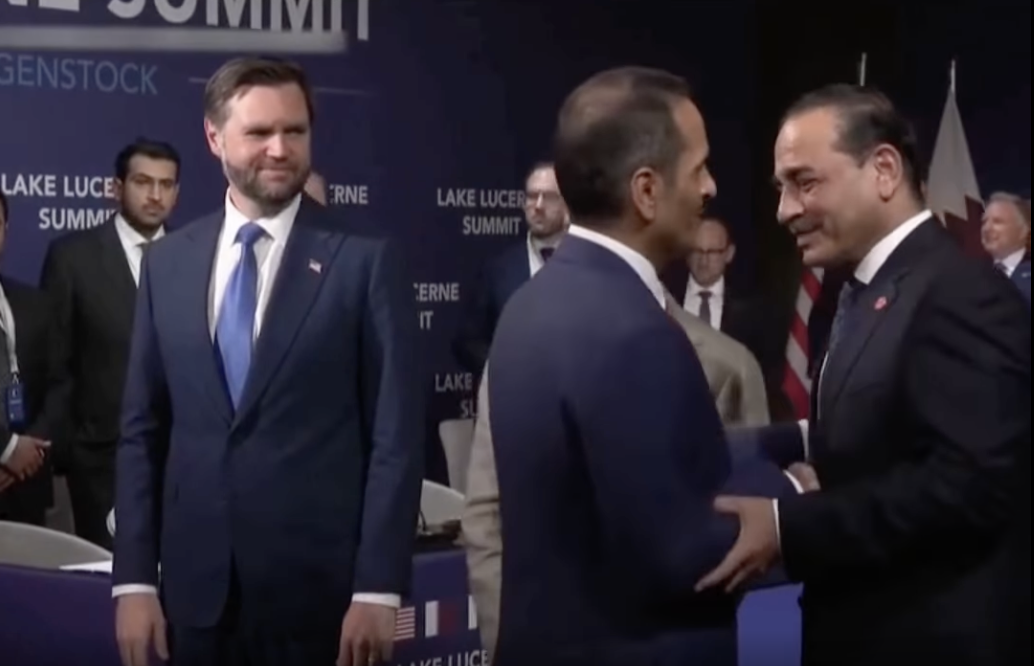
It became obvious to the Iranians, that the American administration was becoming increasingly desirous of a stop to the blockade, and increasingly hesitant to return to hard military power. As such, the Iranians took the position of victor, openly discussing violating the terms of the memorandum while signing it. They even snubbed the Vice President who they left waiting, coming to the meeting late, and walking right past him to shake hands with the Pakistani envoy. To many Americans, this may all seem like small quibbles. To the Middle East, Pakistanis, Chinese, Russians, et al it is weakness.
After the worst terrorist attack in US history, we had a brief chance to fix the Iranian problem, with virtually unlimited public support, but we didn’t want to be “occupiers.” We refused to identify the world-wide, civilizational problem, that included Iran. With the Trump administration, we had another opportunity, though without the public support. Once again, our compassion is preventing us from doing what is necessary. Such empathy does not help the Iranian people. It does not help the US interests. It is not seen as goodness in the eyes of our enemies, to include domestic enemies, but weakness. Weakness is the absolute worst thing you can be perceived to be on the world-stage, especially in the Middle East. Weakness, despite our hard-power military dominance, is what we are currently projecting.